
A house fire is one of the most disorienting things a family can face. The flames may be out, but the damage keeps spreading the moment the fire trucks leave. Smoke odor penetrates wall cavities. Soot settles into HVAC ducts. Water from fire suppression soaks subfloors and insulation. If you are standing in a damaged home right now, we want you to know two things: you are not alone, and acting quickly makes a meaningful difference in what can be saved.
Our crews have worked fire damage restoration jobs across Omaha and the surrounding metro for years. We know the construction styles in Dundee's century-old homes, the finished basements that are common in Millard, and the building patterns in fast-growing communities like Gretna and Elkhorn. That local knowledge shapes every job we take on.
What Happens to a Home After a Fire
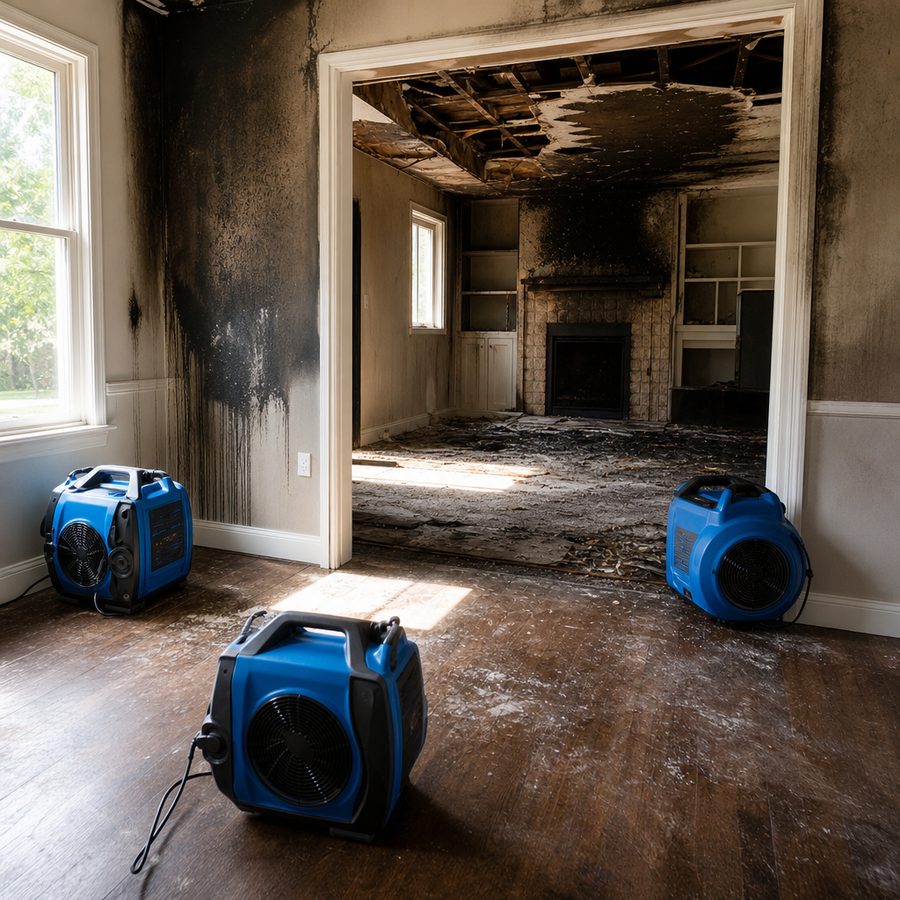
Most homeowners are surprised to learn that fire itself causes only a portion of the total damage. The bigger threats unfold in the hours and days that follow.
Smoke and soot migration. Hot air and smoke travel through wall cavities, crawlspaces, and ductwork far beyond the room of origin. Soot is acidic. Within 72 hours it begins etching metal fixtures, discoloring grout, and permanently staining porous surfaces if it is not removed.
Water damage from suppression. Fire hoses push hundreds of gallons into a structure. That water saturates insulation, wicks into hardwood flooring, and collects in finished basements. Homes in Millard with lower-level family rooms and in-law suites face significant secondary water damage after any fire event.
Structural compromise. Heat weakens framing lumber, can warp engineered floor systems, and degrades drywall integrity even where visible charring is minimal.
Mold risk. Wet building materials plus residual heat create ideal mold conditions. Nebraska has no statewide mold licensing, which means homeowners should look for IICRC-certified technicians as the credible quality signal. Douglas County also requires licensed mold assessment for larger remediation jobs, so proper documentation protects you during the insurance process.
Our Fire Damage Restoration Process
We follow the IICRC S700 standard for smoke and fire restoration. Here is what that looks like in practice on an Omaha job.
1. Emergency stabilization (first 24 hours) - Board up broken windows and doors to prevent intrusion and weather exposure - Tarp or cover roof openings - Extract standing water from fire suppression immediately - Place industrial air movers and dehumidifiers to begin structural drying
2. Comprehensive damage assessment - Document all affected areas with photos and moisture readings for your insurance adjuster - Test for smoke penetration in wall cavities and ductwork - Evaluate structural elements for heat compromise - Flag any materials that require licensed mold assessment under Douglas County requirements
3. Soot and smoke removal - Dry sponge cleaning of walls, ceilings, and surfaces before any wet cleaning - HEPA vacuuming of all ductwork and registers - Thermal fogging and hydroxyl treatment to neutralize embedded odor molecules, not just mask them - Content cleaning and pack-out for salvageable belongings
4. Structural drying and reconstruction - Remove unsalvageable drywall, insulation, and flooring - Dry framing to below 16 percent moisture content before closing walls - Pull permits with the City of Omaha where structural reconstruction is required (this protects your insurance claim and your resale value) - Restore finishes, cabinetry, and flooring to pre-loss condition
What To Do Right Now If Your Home Had a Fire
If the fire department has cleared your home for re-entry, here are the most important steps before our crew arrives.
- Do not run your HVAC system. It will spread soot and smoke particles throughout the entire duct network.
- Do not use household vacuum cleaners on soot. Standard vacuums cannot filter fine soot particles and will make contamination worse.
- Open windows if weather permits to begin ventilation.
- Do not discard anything until it has been documented for your insurance claim.
- Call your homeowner's insurance provider to open a claim as soon as possible.
- Call us. The faster structural drying begins, the more material we can save and the lower your overall restoration cost.
Why Omaha's Climate and Housing Stock Matter
Fire damage restoration in Omaha is not the same as fire damage restoration in Phoenix or Atlanta. Our climate and local building patterns create specific complications.
Nebraska winters bring extended periods of sub-zero temperatures. A fire in January in Benson or Dundee, where older homes have aging plumbing and minimal pipe insulation, can mean a burst pipe on top of fire damage before crews even arrive the next morning. We carry freeze-protection equipment specifically because of this risk.
Spring and summer bring humidity levels that dramatically accelerate mold growth in wet building materials. A structure that was dried adequately in dry October conditions may develop mold in as little as 48 to 72 hours if the same job happened in July.
The housing stock in historic neighborhoods like Dundee means we regularly encounter plaster walls, old-growth lumber framing, and knob-and-tube electrical remnants, all of which require careful handling during restoration rather than a generic tear-and-replace approach.
Fire Damage and Insurance: What to Expect
Most standard homeowner's insurance policies in Nebraska cover fire and smoke damage, including water damage caused by fire suppression. Here is what we have seen matter most during claims.
- Document everything before cleanup. We generate a detailed photo and moisture log on every job. Do not let anyone clean or discard materials before documentation is complete.
- Get a scope of work in writing. Your adjuster works for the insurance company. Having your own written restoration scope protects your interests.
- Understand the difference between ACV and replacement cost policies. Actual cash value policies depreciate your belongings. Replacement cost policies pay to restore or replace at current prices. This distinction matters enormously on a large loss.
- Secondary damage is covered. Water damage from fire suppression and mold that results from that water damage are typically covered under the same claim if remediation began promptly and was properly documented.
Frequently Asked Questions
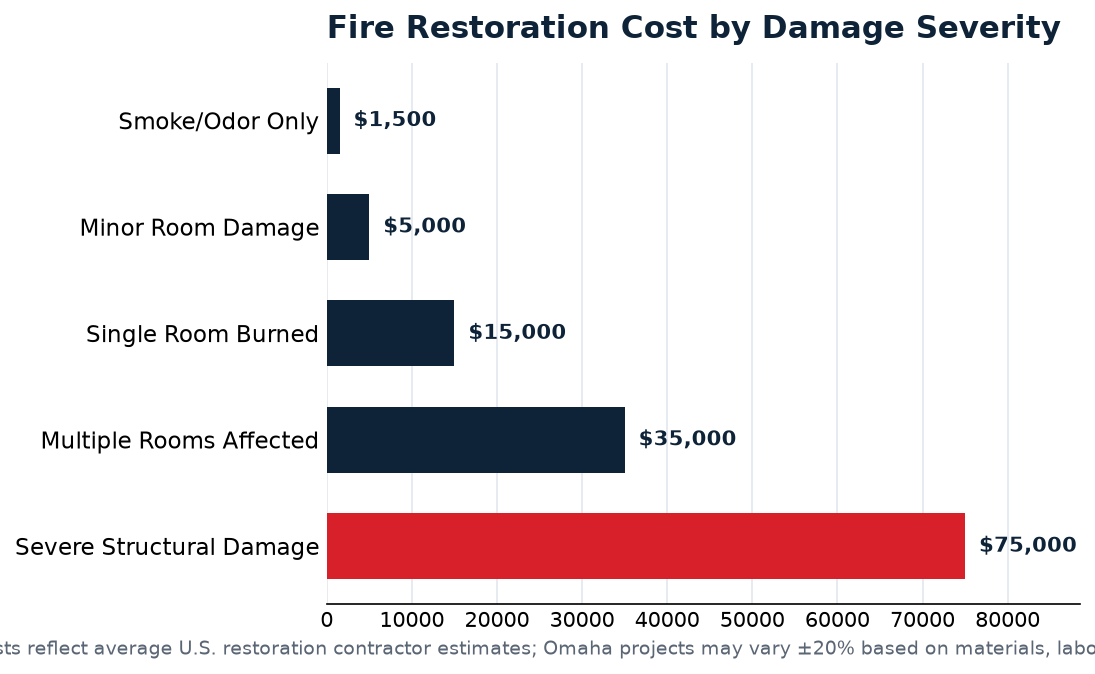
How long does fire damage restoration take for a typical Omaha home? It depends heavily on the size of the fire and the extent of smoke penetration. A contained kitchen fire with limited smoke spread might take two to three weeks. A fire that compromised multiple rooms and the HVAC system can take two to four months from stabilization through full reconstruction. We give you a realistic timeline at the assessment stage, not an estimate designed to win the job.
Can the smoke smell ever be fully eliminated? Yes, with the right process. Surface cleaning alone will not do it. Odor molecules embed themselves in wall cavities, subfloor assemblies, and ductwork. Thermal fogging combined with hydroxyl generation reaches those spaces. Homes we have restored in Millard and Gretna where the full odor treatment protocol was followed consistently pass post-remediation air quality testing.
Do I need a separate mold inspection after a fire? We recommend it any time significant water was introduced during fire suppression. Douglas County requires licensed mold assessment for larger remediation jobs anyway, and having that documentation protects your insurance claim and gives you confidence before your family returns home.
What if part of my home is structurally unsafe after the fire? We will identify compromised structural elements during the initial assessment. City of Omaha permits may be required for structural reconstruction, and we handle that permitting process as part of our scope. We do not ask homeowners to navigate building department requirements on their own during an already stressful time.
Is it ever better to tear down and rebuild rather than restore? In most residential fires, restoration is both faster and less expensive than full rebuild, and insurance carriers generally prefer it. In cases where structural fire penetration is extensive, we will be honest with you about the comparison. We have no financial incentive to recommend one path over the other. Our goal is the outcome that makes the most sense for your family and your home.