
When a storm tears through the metro, we get calls within the hour. Hail-cracked siding, wind-driven rain soaking through a failed roof seam, a basement filling with Papillion Creek backwater at midnight. These are not abstract scenarios for us. We have worked through Omaha winters and summers long enough to know exactly what this city throws at homeowners, and we show up ready for it.
This page walks you through what storm damage restoration actually looks like here, what you should do in the first hour, how insurance fits in, and why the specific geography and climate of Greater Omaha matters more than most people realize.
Why Omaha's Climate Creates Unique Storm Damage Risks
Most storm damage guides read like they were written for anywhere. Ours is not.
Winter (December through February) January lows in Omaha regularly reach -10F to -20F. Uninsulated supply lines inside exterior walls, in crawl spaces, or in attached garages freeze solid and then burst once the house warms back up. In Dundee and Benson, where century-old homes often have original plumbing routed through uninsulated exterior chases, a single cold snap can mean thousands of gallons of water released inside finished living space before the homeowner even notices. If this is happening to you right now, scroll to the FAQ below for immediate steps.
Spring (March through April) This is our busiest window for basement flooding calls. Snowmelt combines with already-saturated ground across the metro, and sump pumps that ran fine all year suddenly cannot keep pace. Homes in La Vista, Millard, and Elkhorn sit on clay-heavy soils that hold water rather than drain it. Sump pits fill faster than the float can cycle. We routinely find finished basements in Millard with four to six inches of standing water purely from groundwater intrusion, no pipe failure involved at all.
Summer (May through July) Derecho events are the underappreciated danger here. A derecho can push 80 to 100 mph straight-line winds across the metro in under twenty minutes, peeling back roof edges, blowing in garage doors, and driving rain horizontally through gaps that would never leak in a normal storm. Wind-driven water intrusion after a derecho behaves differently than a roof leak. It soaks insulation, runs inside wall cavities, and shows up as wet drywall three rooms away from the actual entry point.
Late Summer (August through September) Heavy downpours after dry spells saturate the Papillion Creek watershed fast. Neighborhoods in Papillion and parts of Bellevue near the Missouri River floodplain can see flash flooding that overwhelms both storm drains and aging combined sewer lines. When combined sewers back up, the water entering your basement is not clean. It is a Category 3 biohazard, and it requires a completely different restoration protocol than rainwater.
Our Storm Damage Restoration Process
We follow the IICRC S500 and S700 standards, but here is what that actually looks like in your home.
Step 1: Emergency Stabilization (Hour 1 to 4) - Stop active water entry where possible (emergency tarping, board-up, pipe shutoff) - Extract standing water using truck-mounted or portable extraction units - Document everything photographically before we move a single item (this protects your insurance claim)
Step 2: Moisture Mapping Using thermal imaging cameras and calibrated moisture meters, we map every affected surface. Water travels. A burst pipe on the second floor in an Elkhorn home can saturate floor joists, run down interior wall cavities, and pool under first-floor hardwood before anyone sees a visible stain. We find it before it becomes hidden mold growth.
Step 3: Mold Inspection and Testing Any water event that has sat longer than 24 to 48 hours gets a mold inspection and testing assessment. Omaha's humidity levels in summer create ideal conditions for mold to establish quickly, especially inside wall cavities with wet insulation. We collect air and surface samples and work with a certified industrial hygienist to interpret results honestly. We will not tell you there is a mold problem if there is not one, and we will not minimize one that exists.
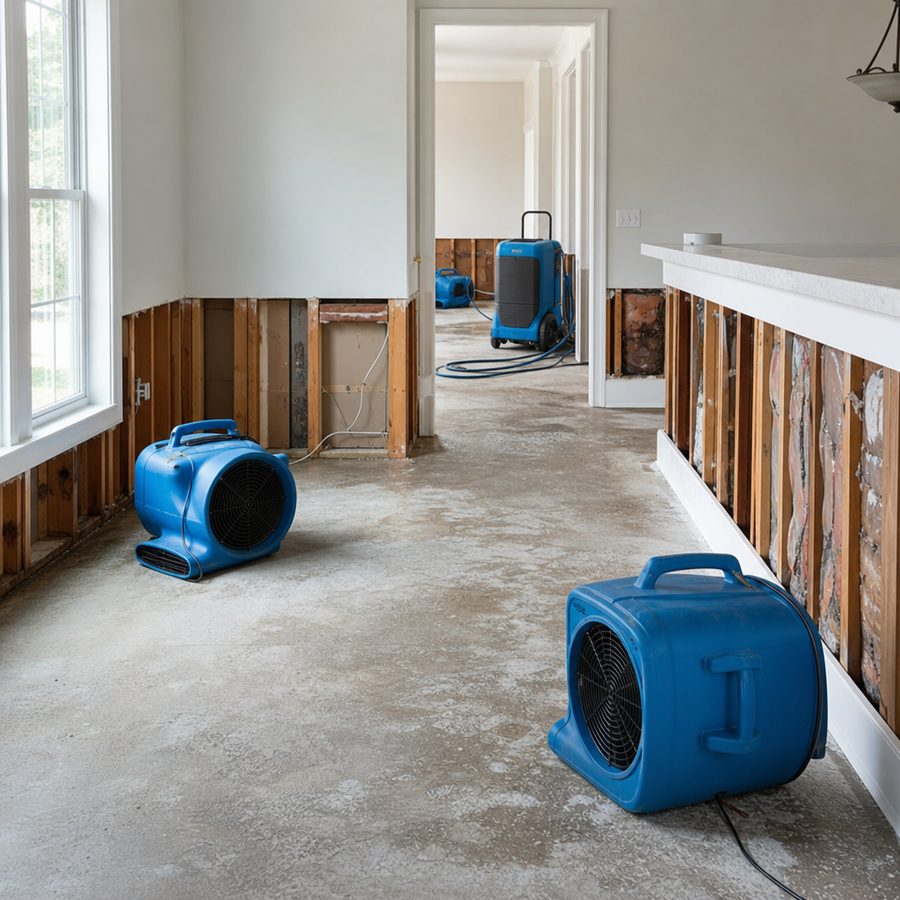
Step 4: Controlled Demolition and Drying Wet drywall, saturated insulation, and compromised flooring come out. We set commercial-grade desiccant or refrigerant dehumidifiers and high-velocity air movers, then monitor moisture levels daily until structural readings return to normal. In our climate, this typically takes three to seven days depending on the materials and the season.
Step 5: Reconstruction Once materials are dry and any mold remediation is complete, our crews handle rebuild. Framing, insulation, drywall, paint, flooring. One company from emergency call to finished room.
Can Water-Damaged Hardwood Floors Be Saved?
This is one of the most common questions we hear, and the honest answer is: sometimes yes, often no, and it depends heavily on how fast you called us.
Solid hardwood that has been wet for less than 24 hours and has not yet begun to cup or buckle has a reasonable chance of being dried in place with targeted drying equipment. Engineered hardwood has a lower tolerance. Floors that sat under standing water for more than 48 hours, especially in a Millard finished basement where the water sat overnight, almost always require removal. Attempting to dry cupped or buckled hardwood in place without moisture mapping almost guarantees subfloor damage and mold underneath. We will give you an honest assessment before we start so you can make an informed decision rather than an emotional one.
What To Do When a Pipe Bursts in Omaha's Deep Freeze
If you are dealing with this right now, here is your immediate action list.
- Shut off the main water supply valve (usually near the water meter in the basement mechanical room)
- Open faucets throughout the house to relieve pressure in the lines
- Do not turn up the heat rapidly. Gradual warming reduces the risk of secondary pipe stress
- Call us. Do not wait to see how much water there is
- Move valuables and electronics off the floor if you can do so safely
In older neighborhoods like Ralston with aging sewer laterals, or in Benson with original cast-iron drain lines, a burst supply line can also overwhelm the drain system and cause a sewage backup simultaneously. If your floor drain is gurgling or backing up, stop using water entirely and call immediately.
Insurance and Costs
Most homeowners insurance covers sudden and accidental water damage from burst pipes and storm-related intrusion. Flood damage from rising groundwater or creek overflow typically requires a separate flood insurance policy through the NFIP. If you are in the Papillion Creek watershed or near the Missouri River floodplain in Bellevue, and you do not have flood insurance, that is a conversation worth having with your agent before the next heavy rain.
We work directly with all major carriers. We document the loss for you, communicate with your adjuster, and make sure nothing gets missed in the initial scope.
Frequently Asked Questions
How quickly does mold start growing after water damage? Mold can begin colonizing wet organic materials like drywall paper and wood within 24 to 48 hours under warm, humid conditions. Omaha summers make that window even shorter. The faster you get water extracted and drying equipment running, the lower your mold risk.
My basement flooded from Papillion Creek backwater. Is that covered by homeowners insurance? Probably not under a standard policy. Flooding from an external body of water is typically excluded and covered only by a separate flood insurance policy. Document everything and call your agent to confirm your coverage before assuming.
Can Water-Damaged Hardwood Floors Be Saved? Yes, in some cases, if we respond quickly and the wood has not yet cupped or buckled significantly. We assess each floor individually with moisture meters and give you a straight answer rather than a guess.
What should I do if my sump pump failed during a spring melt? Shut off electrical panels that serve the flooded area if you can do so without standing in water. Do not run extension cords into wet space. Call us for extraction. A failed sump pump during peak snowmelt season is not a situation that improves on its own.
How long does storm damage restoration take from start to finish? Emergency water extraction and initial drying typically takes three to seven days. Full reconstruction depends on the scope but most residential projects are complete within two to four weeks from the date of loss. We give you a written timeline at the start so you are never guessing.