
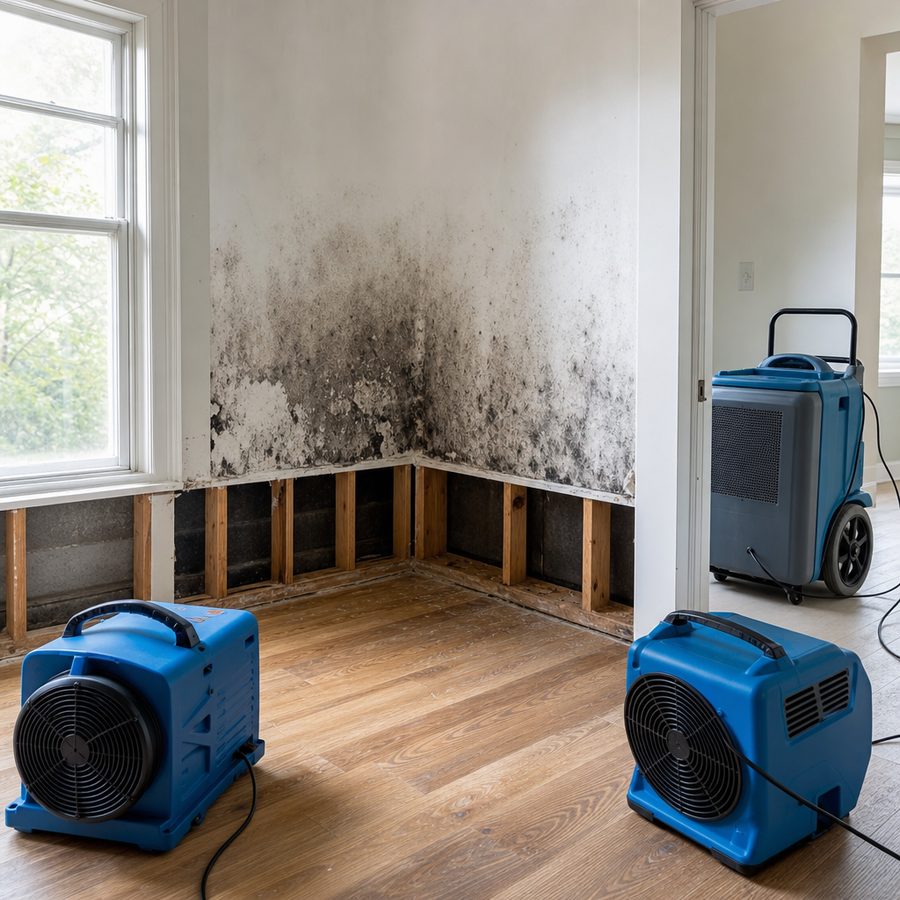
If you've found mold in your home, the clock is already running. Mold colonies can double in size within 24 to 48 hours under the right conditions, and Omaha's humid summers, freeze-thaw winters, and flood-prone neighborhoods give mold plenty of those right conditions. We've worked in finished basements in Millard, century-old homes in Dundee, and sump-pump-dependent houses in La Vista, and we know exactly what drives mold growth here. This page will walk you through what to do right now, what our remediation process looks like, and what you can realistically expect on cost and insurance.
Why Omaha Homes Are Especially Vulnerable to Mold
Mold needs three things: moisture, an organic food source (drywall, wood framing, carpet), and warmth. Omaha hands it all three on a regular basis.
- Finished basements in Millard and Elkhorn trap humidity against below-grade walls. Elkhorn's expansive clay soils hold water against foundations long after a rain event, feeding slow seeps that homeowners often don't notice until mold is well established.
- Older housing stock in Benson and Ralston means aging sewer laterals that back up, soaking subfloor framing with contaminated water. Category 3 (sewage-contaminated) water damage almost always produces mold if drying is delayed even slightly.
- The Papillion Creek watershed through Papillion and La Vista sees flash flooding during heavy spring and summer storms. Homes that take in even a few inches of water through a window well or floor drain can develop mold behind finished walls within days.
- Dundee's century-old homes were built before modern vapor barriers existed. Plaster walls, old balloon framing, and uninsulated rim joists create hidden moisture reservoirs that feed mold for months before it becomes visible.
- Bellevue and Council Bluffs sit in or near the Missouri River floodplain. After major flood events, mold remediation in these communities becomes a neighborhood-wide issue, not just a house-by-house problem.
What Mold Actually Does to a Home (and to You)
Mold breaks down structural materials over time. Left alone, it will compromise drywall paper, wood framing, and subflooring to the point where those materials need full replacement rather than surface treatment. Certain species, including Stachybotrys (black mold) and Aspergillus, produce mycotoxins that cause respiratory irritation, headaches, and more serious reactions in people with asthma or compromised immune systems.
We are not here to scare you. We are here to be straight with you: surface-cleaning visible mold with bleach does not solve the problem. It kills surface spores on non-porous materials but does nothing for mold embedded in drywall or wood, and it does nothing about the moisture source that caused it in the first place.
Mold Inspection and Testing: Where We Start
Before we remove anything, we find everything. Our mold inspection and testing process includes:
- Visual assessment of all moisture-prone areas, including crawl spaces, rim joists, HVAC systems, and behind visible water staining
- Moisture mapping using thermal imaging cameras and non-invasive moisture meters to locate wet materials inside walls and under floors
- Air sampling and surface sampling when the extent of contamination is unclear or when you need documentation for insurance or a real estate transaction
- Lab analysis through an accredited third-party laboratory, with results typically available within 24 to 48 hours
Douglas County requires a licensed mold assessment for larger remediation jobs, and we work with licensed assessors to make sure your project meets that requirement. Because Nebraska has no statewide mold licensing law, the quality signal to look for in any remediation contractor is IICRC certification (specifically the AMRT, Applied Microbial Remediation Technician credential). Our crews hold that certification, and we will show you documentation before we start.
Our Mold Remediation Process, Step by Step
- Containment. We seal the affected area with polyethylene sheeting and negative air pressure to prevent spores from spreading to clean areas of your home during the removal process.
- HEPA air filtration. Industrial air scrubbers with HEPA filters run continuously throughout the project, capturing airborne spores.
- Removal of contaminated materials. Drywall, insulation, carpet, and framing that cannot be effectively cleaned are removed and bagged in sealed, labeled containers per EPA guidelines.
- Antimicrobial treatment. Remaining structural surfaces are treated with EPA-registered antimicrobial agents. We do not use ozone generators in occupied spaces.
- Structural drying. If moisture is still present, we dry the structure to IICRC S520 standards before any rebuild begins. The City of Omaha may require permits for structural drying and reconstruction work, and we handle that paperwork.
- Clearance testing. Before we close walls, an independent post-remediation verification confirms spore counts have returned to normal background levels. You get that report in writing.
- Reconstruction. Our crews can handle the rebuild, from new drywall and insulation to finish work, so you are not managing two separate contractors.
What To Do Right Now While You Wait for Us
- Turn off HVAC systems if mold is confirmed or strongly suspected. Running the system spreads spores through ductwork.
- Do not run fans directly on visible mold for the same reason.
- If the mold followed a water event, stop the source first. A slow seep behind a Elkhorn foundation wall or a burst pipe in a La Vista utility room needs to stop before remediation starts.
- Keep children and anyone with respiratory conditions out of the affected area.
- Take photos for your insurance claim before moving or cleaning anything.
Cost and Insurance: What to Expect
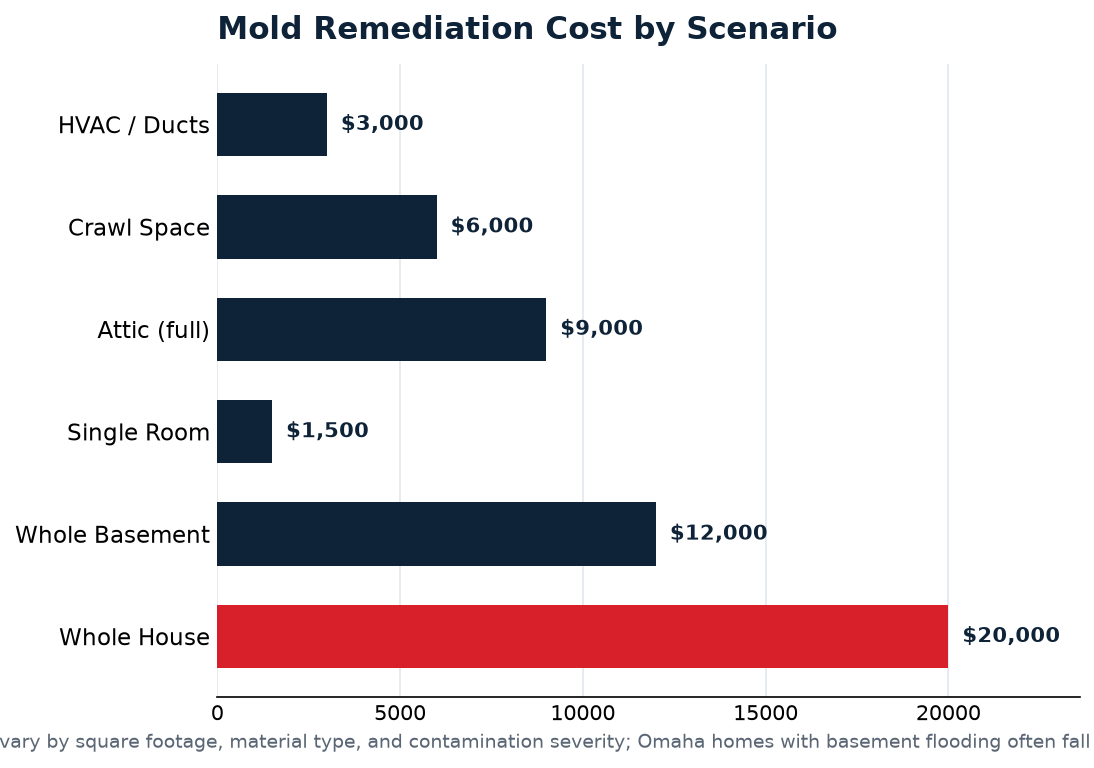
Mold remediation costs in Omaha typically range from around $1,500 for a small, contained bathroom or crawl space situation to $10,000 or more for large affected areas with significant structural involvement. The biggest cost drivers are the square footage of contaminated material, whether Category 3 water (sewage) was involved, and how much reconstruction follows removal.
Homeowners insurance coverage for mold is inconsistent. Most policies cover mold that resulted directly from a sudden, covered water event (a burst pipe, for example) but exclude mold from long-term seepage or maintenance neglect. We work with all major carriers and can provide the documentation adjusters need, including moisture readings, lab reports, and a detailed scope of work. We recommend you call your insurance company before you call anyone else, and then call us.
Frequently Asked Questions
How do I know if I have mold or just mildew? Mildew stays on the surface and is typically gray or white. Mold penetrates porous materials and is often black, green, or brown with a fuzzy texture. If it is growing on drywall, wood, or insulation and you can smell a musty odor, treat it as mold until testing says otherwise.
Can water-damaged hardwood floors be saved? Sometimes, yes. If hardwood floors are dried within the first 24 to 48 hours using specialized drying equipment and the mold has not yet penetrated the wood fiber, we can often save them. Floors that have been wet for longer, or that show visible mold growth between boards or on the subfloor below, usually require replacement. We assess each floor individually before making a recommendation.
What should I do when a pipe bursts in Omaha's deep freeze? Shut off the main water supply immediately. Then call us and your insurance company, in that order. Do not wait to see how bad the damage is. In Omaha's winters, a burst pipe in an exterior wall or unheated crawl space can dump significant water into wall cavities in minutes. The faster we get drying equipment in place, the better your odds of avoiding mold entirely.
Do I need to leave my home during remediation? For small, well-contained projects, most homeowners can stay home. For larger projects involving multiple rooms or HVAC contamination, we recommend staying elsewhere until clearance testing is complete. We will give you an honest recommendation based on your specific situation, not a blanket policy.
How long does mold remediation take? Most residential projects take two to five days for the remediation itself, not counting reconstruction. Larger jobs or those involving Category 3 contamination take longer. We give you a written timeline before work begins and update you if anything changes.