
A flooded basement is one of the most stressful things a homeowner can face. Water is rising, your belongings are at risk, and every minute that passes increases the damage. Our crews respond across Omaha and the surrounding metro around the clock because we know this region's specific flooding risks, and we know how to stop the damage before it becomes a rebuild.
This page walks you through what causes basement flooding here in Omaha, what our flooded basement cleanup process actually looks like, what you should do right now if water is coming in, and what to expect on costs and insurance. No filler. Just the information you need.
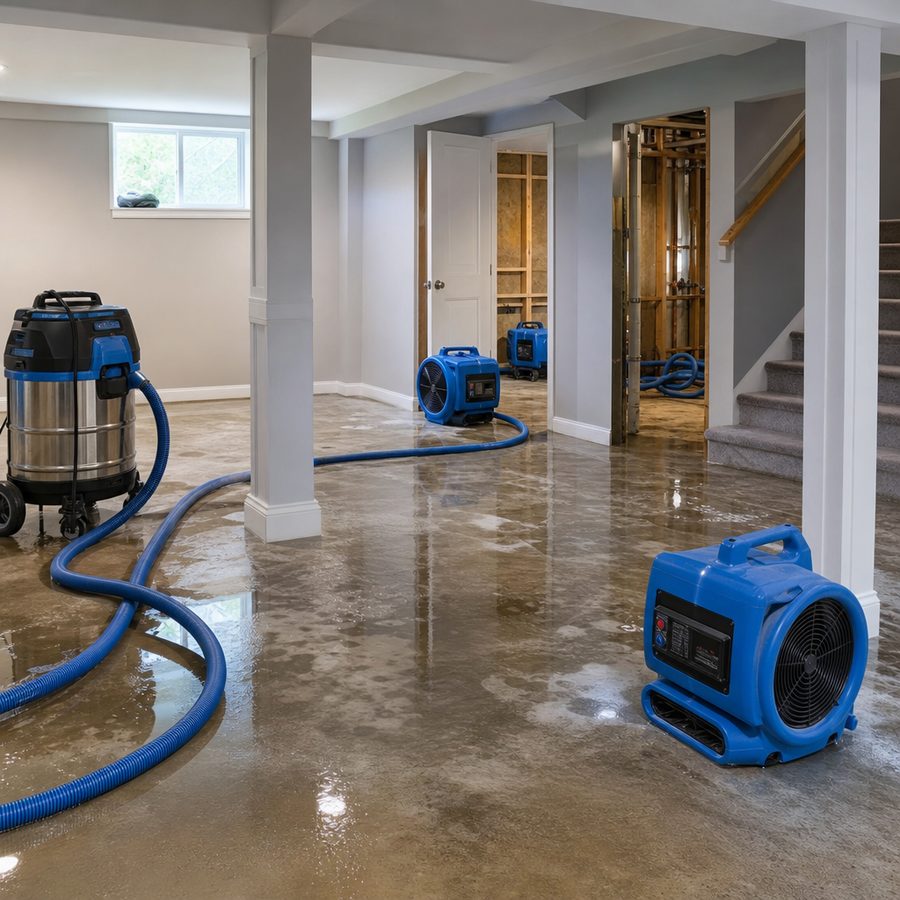
Why Omaha Basements Flood: Local Causes You Should Know
Basement flooding in our area is not random. It follows predictable patterns tied to soil, infrastructure age, and our extreme seasonal weather.
Spring snowmelt and saturated ground hit hardest in March and April. After a winter of heavy accumulation, the ground is frozen solid underneath the surface layer. Melting snow has nowhere to go. Sump pumps in La Vista and Elkhorn run continuously during these events, and when they fail or lose power, finished basements fill quickly. Elkhorn's clay-heavy soils make this worse because clay holds water rather than letting it drain away from foundations.
Summer derechos and thunderstorms are a serious and underappreciated risk. A fast-moving derecho can dump three inches of rain in under an hour. Window wells overflow. Foundation cracks that seemed minor suddenly admit hundreds of gallons. The Papillion Creek watershed in and around Papillion is especially vulnerable to flash flooding during these storms.
Aging combined sewer lines create a different kind of nightmare in older Omaha neighborhoods. When heavy rain overloads the sewer system, the pressure reverses and sewage backs up through floor drains. Ralston homeowners deal with this regularly because of the older sewer lateral infrastructure in that part of the city. Benson and Dundee see similar problems in century-old homes where the original clay tile sewer lines have cracked, shifted, or corroded over decades.
Frozen and burst pipes during January cold snaps cause sudden, catastrophic water releases. When temperatures drop to single digits or below, supply lines in unheated crawl spaces or along exterior walls can freeze and then burst once temperatures rise. One burst pipe can release hundreds of gallons before you even realize what is happening.
Missouri River floodplain risk affects homeowners in Bellevue and across Sarpy County, particularly those near low-lying areas. Council Bluffs, just across the Missouri River, sits in a historic flood zone, and when the river is running high, basement water intrusion can come from hydrostatic pressure pushing through walls and floors rather than from above.
What Our Flooded Basement Cleanup Process Looks Like
We follow a structured process because improvising during water damage costs homeowners time and money.
1. Emergency Assessment and Water Source Control
We arrive and immediately identify where the water is coming from. If a burst pipe is the source, we help isolate the water supply. If it is groundwater intrusion, we assess the entry points before extraction begins.
2. Standing Water Extraction
We use truck-mounted and portable extraction units to remove standing water fast. For a typical finished basement in Millard with several inches of water, this process takes one to three hours depending on volume.
3. Moisture Mapping
Once visible water is gone, we use thermal imaging cameras and moisture meters to map exactly how far water has traveled into walls, subfloors, and framing. Water hidden inside wall cavities causes mold and structural damage if it is missed.
4. Drying and Dehumidification
We place industrial air movers and refrigerant or desiccant dehumidifiers throughout the space. Typical drying takes three to five days. We monitor readings daily and adjust equipment placement based on the data.
5. Mold Inspection and Testing
Any water event lasting more than 24 to 48 hours creates conditions where mold can establish. We conduct a mold inspection and testing evaluation as part of our process, checking air quality and surface samples where warranted. If mold is present, remediation happens before any rebuilding begins. We will not cut corners here because hidden mold found after reconstruction means tearing everything out again.
6. Contents and Structural Cleaning
We clean and treat affected surfaces with EPA-registered antimicrobials. Salvageable contents are inventoried. Unsalvageable materials, including wet drywall, insulation, and saturated carpet, are removed and documented for your insurance claim.
Can Water-Damaged Hardwood Floors Be Saved?
This is one of the most common questions we get. The honest answer is: sometimes, and timing is everything.
Hardwood floors that have been wet for under 24 hours and show minimal cupping have a reasonable chance of being saved through controlled drying. Floors that have been submerged, or that show significant buckling and crowning, usually cannot be brought back to pre-loss condition and need replacement.
We assess each floor individually before making a recommendation. We do not push for replacement when drying is a legitimate option, and we do not promise results that the material cannot deliver.
What To Do When a Pipe Bursts in Omaha's Deep Freeze
If a pipe bursts during one of Omaha's sub-zero January cold snaps, here is exactly what to do in the first 15 minutes.
- Shut off the main water supply at the street-level shutoff or the interior shutoff near your water meter. Know where this is before winter arrives.
- Do not enter a basement with standing water if there is any possibility that electrical outlets, panels, or appliances are submerged.
- Call your utility provider if you suspect water has reached your electrical panel.
- Call us. The faster extraction begins, the less secondary damage occurs.
- Take photos and video of everything before touching or moving anything. Your insurance adjuster will need this documentation.
Costs and Insurance: What Homeowners in Omaha Should Expect
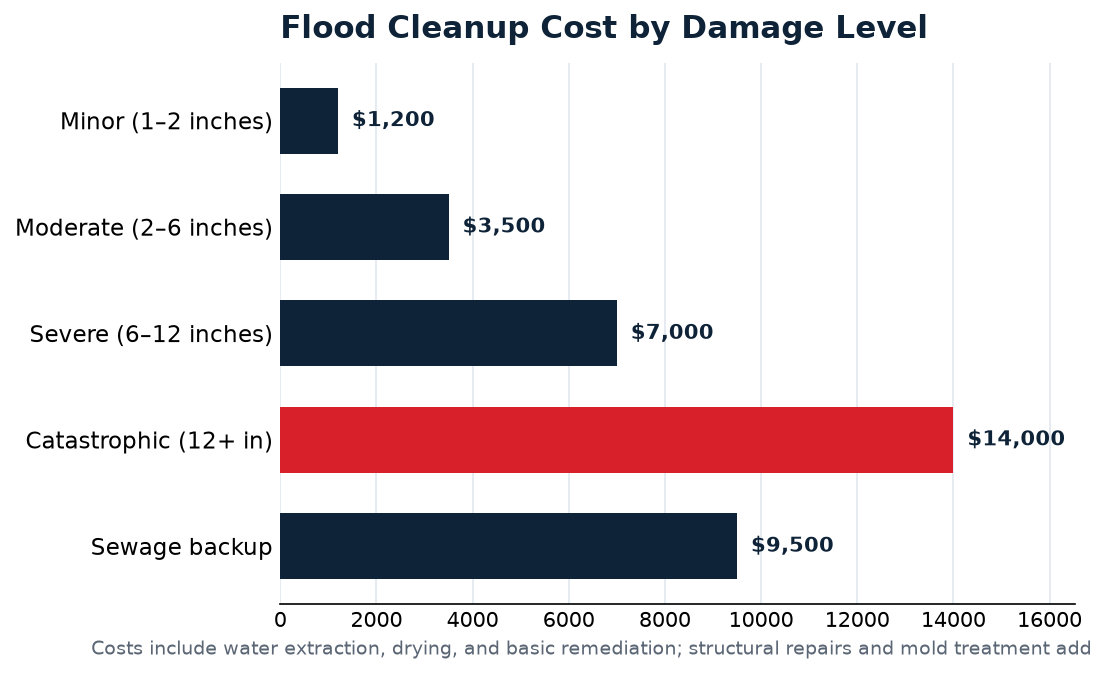
Flooded basement cleanup costs vary based on square footage, water category (clean water vs. gray water vs. sewage), and how much structural material needs to be removed.
General ranges for Omaha-area projects run from roughly $1,500 to $2,500 for a smaller clean-water event in an unfinished basement, up to $10,000 or more for a finished basement with sewage contamination or significant structural involvement.
Most standard homeowner policies cover sudden and accidental water damage (burst pipes, appliance failures) but exclude flood damage from external sources. Separate flood insurance through FEMA's National Flood Insurance Program is essential for homes in Bellevue or Papillion Creek floodplain areas.
We work directly with all major insurance carriers and provide complete documentation including moisture logs, photo evidence, and itemized scopes to support your claim.
Frequently Asked Questions
How quickly can mold start growing after a basement flood? Mold can begin colonizing porous materials within 24 to 48 hours under the right temperature and humidity conditions. Omaha's humid summers accelerate this. This is why we treat every water event as time-sensitive and include mold inspection and testing in our scope.
Is sewage backup in my basement covered by homeowner insurance? Standard policies often exclude sewer backup unless you have purchased a specific sewer backup rider. Check your policy now rather than after an event. Older Ralston and Benson homes are at higher risk for this type of loss.
My sump pump failed during a storm. What should I do first? First, cut power to the area if water is near outlets. Then call for emergency extraction. Once water is removed, we can help you evaluate whether your sump pump needs repair or replacement and whether a battery backup system makes sense for your home.
Will my hardwood floors definitely need to be replaced? Not necessarily. We assess the moisture content, species of wood, and how long the floor was wet before making a recommendation. In many cases, controlled drying saves the floor. We give you an honest answer based on what we find, not on what generates the highest job cost.
How long does the full cleanup process take? For a straightforward clean-water event in an unfinished basement, the extraction and drying process typically takes four to six days. A finished basement with contaminated water and structural material removal can take two to three weeks before the space is ready for reconstruction.
We serve Omaha, Millard, Bellevue, Papillion, La Vista, Elkhorn, Ralston, Gretna, Dundee, Benson, and surrounding communities. If your basement is flooding right now, call us. We answer 24 hours a day, every day of the year.