
When raw sewage backs up into your basement or crawl space, every minute matters. We have worked alongside Omaha homeowners long enough to know that a sewage backup is not just a plumbing problem. It is a health emergency, a structural threat, and a financial stressor all at once. Our crews are available around the clock because sewage does not back up at convenient times, and the damage it causes compounds quickly if it sits.
This page tells you exactly what to expect: what causes backups here in Omaha, what our sewage cleanup process involves step by step, what you should do right now before we arrive, and how insurance typically handles these claims.
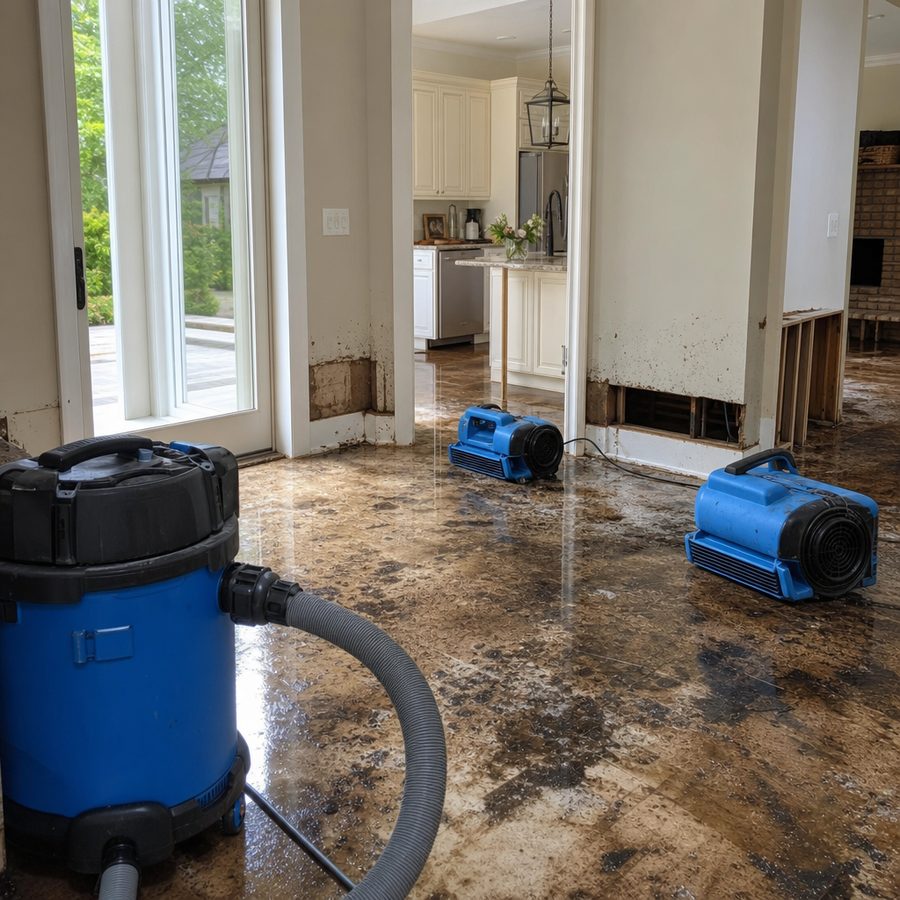
Why Sewage Backups Happen So Often in Omaha
Omaha's geography, climate, and housing stock create a combination of conditions that make sewage backups more common here than in many other metro areas.
Aging sewer infrastructure in older neighborhoods. In Ralston, the sewer laterals running from homes to the city main are decades old. Cast iron and clay tile pipes crack, root, and collapse over time. When heavy rain saturates the ground, combined sewer lines fill with both stormwater and sewage. The system overloads and backs up into basements. We see this pattern repeat in Dundee and Benson as well, where century-old homes have similarly aged underground infrastructure.
Floodplain pressure in Sarpy County. Homes near the Missouri River floodplain in Bellevue and along the Papillion Creek watershed in Papillion face elevated basement flooding risk during wet seasons. When ground saturation is high, municipal sewer systems cannot drain fast enough, and that pressure pushes sewage backward through floor drains and toilet connections.
Spring snowmelt and sump pump failure. Every spring in Omaha, snowmelt combines with rain on already-saturated ground. In La Vista and Elkhorn, many newer homes depend entirely on sump pumps to keep basements dry. When those pumps fail or lose power during a spring storm, the water has nowhere to go except back through floor drains, sometimes carrying sewage with it.
Sub-zero winter pipe bursts. During Omaha's hard January cold snaps, supply lines freeze and burst. A burst pipe behind a wall can drain hundreds of gallons before anyone notices. That water, combined with an overwhelmed drain system, can accelerate a backup event.
Grease, wipes, and root intrusion. Even in newer Millard or Gretna homes, blockages from flushed wipes, grease buildup, and tree root intrusion into lateral lines cause backups independent of weather.
The Health Risk You Cannot See
Sewage water is classified as Category 3 water by the Institute of Inspection Cleaning and Restoration Certification (IICRC). That means it contains bacteria, viruses, and parasites. Even after the visible water is gone, contamination remains on every surface the sewage touched, including drywall, framing, insulation, carpet padding, and concrete.
Children, elderly adults, and anyone with a compromised immune system face serious risk from exposure. Do not attempt to clean sewage yourself with household products. Bleach on a contaminated floor does not address what has soaked into porous materials.
This is also why we always include a mold inspection and testing evaluation after sewage cleanup. Sewage water introduces organic matter that feeds mold growth. Without confirming that mold has not taken hold in wall cavities or under flooring, a homeowner may believe the problem is resolved when a secondary issue is already developing.
What To Do Right Now, Before We Arrive
- Do not enter the affected area if the water is deep or if you are unsure whether electricity is on in that zone.
- Shut off water at the main if a pipe burst contributed to the backup.
- Do not run water in the home. Running sinks, flushing toilets, or running the dishwasher will push more sewage into the backup.
- Document everything with your phone camera before touching a single item. Your insurance adjuster will need this.
- Call your insurance company to open a claim. Sewage backup coverage is often a separate endorsement, not part of standard homeowners policies. Open the claim early.
- Call us. We respond 24 hours a day.
Our Sewage Cleanup Process, Step by Step
We do not rush through a sewage job to move on to the next call. Here is what thorough work actually looks like.
Step 1: Containment and safety assessment. We establish a containment zone to prevent cross-contamination to unaffected areas of the home. We assess structural safety and electrical hazards before our crews enter.
Step 2: Extraction. We remove all standing sewage water using truck-mounted or portable extraction equipment designed for contaminated water, not standard wet vacuums.
Step 3: Removal of contaminated materials. Drywall, insulation, carpet, and flooring that absorbed sewage water must be removed. We document everything for your insurance claim. This step is non-negotiable. Leaving contaminated material in place guarantees mold growth and continued health risk.
Step 4: Antimicrobial treatment. We apply EPA-registered antimicrobial agents to all affected structural surfaces, including concrete, framing, and subfloor, to eliminate bacterial contamination.
Step 5: Drying and dehumidification. Industrial air movers and dehumidifiers run for multiple days. We monitor moisture readings in walls and floors with meters throughout this phase.
Step 6: Mold inspection and testing. Before any reconstruction begins, we conduct a thorough mold inspection and testing evaluation. If mold is present, we address it as part of the same project rather than leaving it for you to discover later.
Step 7: Reconstruction. We handle full restoration, including framing, drywall, flooring, and painting, so you work with one company from emergency response through finished repair.
Sewage Cleanup Costs and Insurance in Omaha
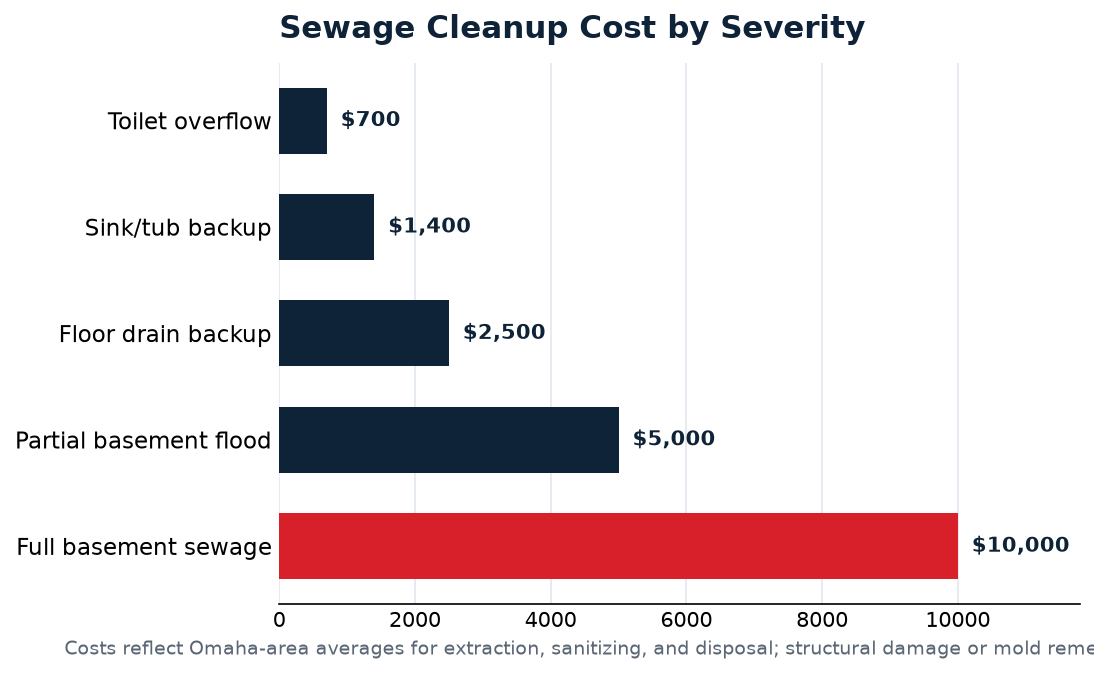
Costs vary based on the size of the affected area, the materials involved, and how long the sewage sat before cleanup began. A single-room basement event handled quickly will cost significantly less than a finished basement in Millard that soaked for two days.
Most standard homeowners policies do not automatically cover sewage backup. Coverage typically requires a separate sewage backup endorsement or rider. Review your policy now, before an emergency, and call your agent if you are unsure.
When coverage does apply, we work directly with your insurance adjuster, provide complete photo documentation, and submit detailed scopes of work so you are not caught in the middle of a dispute.
Frequently Asked Questions
Can I stay in my home during sewage cleanup? It depends on the extent of contamination. For a small, isolated area, staying in an unaffected part of the home may be fine. For a heavily contaminated basement with HVAC involvement, temporary relocation is the safer choice. We will give you an honest assessment on-site.
How long does sewage cleanup take? Extraction and initial sanitization typically take one to two days. Full drying takes three to five days depending on materials and conditions. Reconstruction adds additional time. We give you a realistic schedule upfront, not an optimistic estimate.
What To Do When a Pipe Bursts in Omaha's Deep Freeze and it causes a backup? Shut off the main water supply immediately. Do not run any fixtures. Call a plumber and a restoration company at the same time. The pipe repair and the water and sewage damage are separate scopes of work that need to run in parallel to limit total damage.
Can Water-Damaged Hardwood Floors Be Saved after a sewage backup? Rarely, if the floors were directly contacted by sewage water. Because hardwood is porous, it absorbs contamination deeply. Sanding and refinishing does not eliminate biological contamination. Replacement is almost always the correct answer after Category 3 exposure.
Does homeowners insurance cover mold that develops after a sewage backup? Mold that results from a covered sewage backup event is often included in the same claim, but only if it is discovered and documented during the restoration process. Mold found months later after an unreported or improperly remediated event is typically excluded. This is exactly why we include mold inspection and testing in every sewage cleanup project.
Call us anytime. We serve Omaha, Bellevue, Papillion, La Vista, Ralston, Millard, Elkhorn, Dundee, Benson, Gretna, and Council Bluffs with 24-hour emergency response.